Mold Removal DIY: What Works and When to Call a Pro
Reviewed by our editorial team for accuracy
Quick answer: Small mold patches under 10 square feet on non-porous surfaces can often be cleaned with hydrogen peroxide, white vinegar, or a diluted bleach solution. The critical qualifier: DIY mold removal only addresses visible growth — it cannot identify hidden colonies behind drywall or eliminate the underlying moisture source driving continued growth.
How to Remove Mold: What DIY Cleaning Can and Cannot Do
DIY mold removal is genuinely effective on a narrow set of problems — small, surface-level growth on non-porous materials in a dry environment. In West Palm Beach, that narrow set is narrower still.
Safe DIY mold removal: the EPA size threshold and surface rules
The EPA's widely cited guideline permits homeowner remediation on patches 10 square feet or smaller — roughly a 3×3 foot area. That boundary assumes the material is non-porous (tile, glass, sealed countertop), the moisture source is fixed, and ambient conditions won't accelerate regrowth.
Those assumptions routinely break down locally. Homes in FEMA Special Flood Hazard Areas carry structural moisture that wicks upward long after visible water recedes. Pre-1980 wood-frame construction — common throughout older West Palm Beach neighborhoods — holds moisture in ways that modern building assemblies don't, and Florida's sustained relative humidity keeps surfaces damp enough for Stachybotrys chartarum (black mold) to colonize within 24–48 hours of the initial wetting event. A mold patch that looks like 8 square feet on drywall is often 30 square feet inside the cavity behind it.
Is mold removal cost worth it compared to DIY cleaning? For surface spots on tile or sealed concrete, DIY is cost-effective. For anything touching drywall, insulation, or subfloor — or in a home with a flood history — the cost of incomplete removal (return growth, hidden structural damage, health exposure) almost always exceeds professional fees.
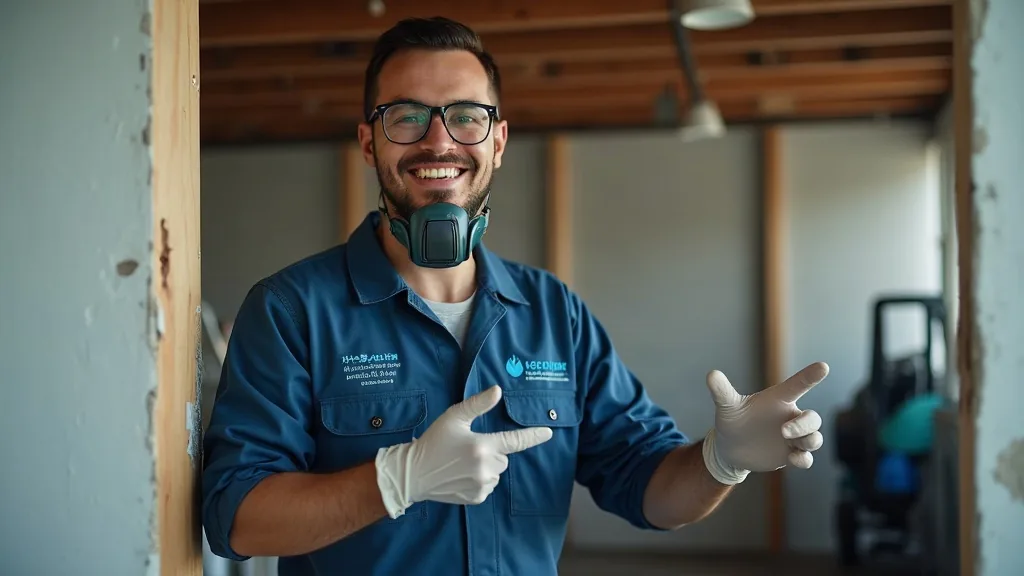
Protective gear and ventilation before you start
Before mixing any solution, gear up properly:
- Respiratory protection: N95 respirator minimum; P100 half-mask for larger patches
- Eye protection: sealed goggles, not safety glasses
- Skin: disposable gloves and long sleeves
- Ventilation: open windows away from the work area, use a box fan exhausting outward, and seal interior doorways with plastic sheeting
Run a HEPA vacuum over loose spores before applying any liquid — wetting spores without capturing them first spreads the colony.
Step-by-step: hydrogen peroxide, vinegar, and baking soda methods
These three agents each work through a different mechanism and suit different surface types:
| Agent | Concentration | Best surface | Contact time |
|---|---|---|---|
| Hydrogen peroxide | 3% (pharmacy grade) | Tile, sealed grout, tubs | 10–15 minutes |
| White vinegar | Undiluted | Non-porous hard surfaces | 1 hour |
| Baking soda paste | 1 tbsp per cup water | Light surface staining | Scrub immediately |
| Diluted bleach solution | 1 cup per gallon water | Non-porous surfaces only | 10 minutes |
Method:
- Spray or apply your chosen agent directly — do not dilute hydrogen peroxide or vinegar further.
- Let it dwell for the listed contact time without scrubbing, so it penetrates surface cells.
- Scrub with a stiff brush, wipe residue with a disposable cloth, and bag it immediately.
- Apply a second pass of hydrogen peroxide or vinegar and allow it to air-dry completely.
- Verify dryness with a moisture meter — readings below 16% for wood substrates indicate the surface is unlikely to support regrowth.
None of these methods satisfy the IICRC S520 mold remediation standard, which governs professional work and requires containment, air scrubbing, and post-remediation verification. For permitted remediation work in West Palm Beach, the City of West Palm Beach Building Division and the Florida Building Code may both require documentation that a licensed contractor completed the work — particularly after a flood loss. DIY cleaning on its own produces no such documentation, which matters when you file with a carrier or sell the property.
Why Surface Cleaning Often Fails — Especially in West Palm Beach Homes
Surface cleaning removes what you can see. In most West Palm Beach homes, what you can see is a fraction of what is actually there.
Hidden growth behind walls: what a spray bottle cannot reach
Mold colonizes the cavity side of drywall, the back face of baseboards, and the interior of wall insulation — surfaces no spray bottle, brush, or HEPA vacuum reaches without demolition. When you wipe a visible patch with a diluted bleach solution or hydrogen peroxide, you are treating the tip of a structure whose root system (the hyphal network) may extend several inches into porous substrate.
This matters practically because:
- Drywall paper is cellulose — a preferred food source for Stachybotrys chartarum (black mold), which produces mycotoxins and requires more than surface disinfection to eliminate
- The EPA 10-square-foot guideline for DIY remediation assumes the visible patch is the colony — an assumption that rarely holds after any water intrusion event
- A moisture meter reading above 16–20% on an adjacent wall cavity almost always signals concealed growth, not just surface contamination
How South Florida humidity and flood-zone groundwater keep feeding mold
Eliminating visible mold without eliminating its moisture source produces regrowth, often within 24–48 hours under West Palm Beach's climate conditions. Relative humidity in South Florida routinely exceeds 70% for months at a time — well above the 60% threshold at which most mold species sustain active growth without any additional water source.
For properties inside FEMA Special Flood Hazard Areas — a designation covering significant portions of West Palm Beach — groundwater infiltration through slab and foundation gaps continues long after floodwater recedes. That sustained subsurface moisture wicks upward into wall assemblies, keeping relative humidity inside cavities elevated even when the interior air feels dry. A surface clean addresses none of that.
Does homeowners insurance cover mold removal in Florida? Standard Florida homeowners policies typically cover mold remediation only when it results directly from a covered peril — a burst pipe, for example — and most impose sub-limits between $10,000 and $15,000. Mold traced to gradual moisture intrusion, deferred maintenance, or flood water (which requires separate NFIP coverage) is commonly excluded. DIY cleaning that fails to document the source, extent, and remediation method can complicate a claim further.
Pre-1980 construction materials that make DIY remediation riskier
West Palm Beach's pre-1980 wood-frame construction stock introduces two compounding hazards. First, older dimensional lumber is denser and more deeply porous than modern engineered wood, allowing hyphal penetration that surface agents cannot neutralize. Second, pre-1980 building materials — including certain drywall compounds, floor tiles, and pipe insulation — may contain asbestos. Disturbing those materials during mold remediation without prior testing violates both the Florida Building Code and federal NESHAP regulations, converting a mold problem into a regulated hazmat event.
The IICRC S520 mold remediation standard exists precisely because these variables — concealed growth, sustained moisture sources, and hazardous legacy materials — require assessment, containment, and verification that a spray bottle and an N95 respirator cannot provide. In this market, the DIY window is not just narrower than national guides suggest; for flood-affected or pre-1980 homes, it is often closed before the cleaning starts.
Is Mold Removal Cost Worth It? DIY vs. Professional Remediation
Professional remediation costs more upfront. Whether it costs more overall depends on what happens when the cheaper option fails — and in West Palm Beach, the failure modes are specific and predictable.
How much does attic mold removal cost — and why attics are high-risk
Attic remediation is consistently one of the most expensive mold scopes in residential restoration, typically ranging from a few thousand dollars for a localized area to well above $10,000 when structural sheathing is involved. The range is wide because attic complexity is wide.
Several factors drive attic costs higher than other areas:
- Roof deck penetration. In South Florida's humidity, Stachybotrys chartarum and faster-growing species colonize the underside of roof sheathing where ventilation is inadequate. Hyphal penetration into wood grain means surface agents — hydrogen peroxide, white vinegar, baking soda, diluted bleach solution — address appearance, not structure.
- Pre-1980 sheathing. Older board sheathing absorbs moisture more deeply than modern plywood, extending drying time and remediation scope. HEPA vacuum removal of loose spore material is standard under IICRC S520, but older sheathing may require encapsulation or partial replacement.
- Access and containment. Proper containment to prevent cross-contamination into living spaces during remediation adds labor that flat-rate online estimates rarely include.
- Permit requirements. Structural repairs to sheathing in West Palm Beach trigger Florida Building Code compliance and may require a permit through the City of West Palm Beach Building Division — a step DIY attic work almost never includes.
A moisture meter reading above 16–17% in attic framing is a reliable early indicator that the problem extends beyond what surface cleaning can reach.
Does homeowners insurance cover mold removal in Florida?
This question was addressed in the prior section, but the attic context adds one important detail: attic mold traced to a slow roof leak — rather than a sudden, covered event — is frequently classified as gradual damage and excluded. Documenting the moisture source, affected square footage, and remediation method before cleaning begins is not optional if you intend to file. Incomplete DIY attempts that obscure the original damage pattern can reduce or void a claim.
How long does mold removal take?
How long does mold removal take? For a contained area under the EPA's 10-square-foot threshold on a non-porous surface, a careful DIY clean takes a few hours. Professional remediation of a moderate residential scope — one or two affected rooms — typically runs two to five days when containment setup, drying, remediation, and post-clearance testing are included. Attic projects routinely extend to a week or more.
The reason mold can return within 24–48 hours under the right conditions is the same reason timelines matter: remediation that ends before the moisture source is identified and the substrate reaches safe readings (generally below 16% with a calibrated moisture meter) has not actually ended. It has paused.
In FEMA Special Flood Hazard Areas, where subsurface moisture continues to wick upward after a flood event, that pause can look like success for two or three weeks before visible growth resumes. Professional clearance testing — an air sample compared against an outdoor baseline — is the only reliable confirmation that remediation is complete, not the absence of visible mold on the day the crew leaves.
The cost comparison between DIY and professional remediation is straightforward when the scope is truly small and the surface is genuinely non-porous. In most West Palm Beach homes with any flood history or pre-1980 construction, that scenario is the exception.
When DIY Stops and a Vetted Specialist Should Take Over
Call a professional when the scope, the substrate, or the moisture source falls outside what surface cleaning can resolve. In West Palm Beach, those conditions appear earlier and more often than national guidelines imply.
Clear signals that professional inspection is the right next step
Any of the following should end the DIY attempt immediately:
- Visible growth larger than 10 square feet — the EPA guideline that defines the outer boundary of homeowner remediation
- Musty odor without visible growth — a reliable sign of colonization inside wall cavities or beneath flooring
- Moisture meter readings above 16–17% in framing, drywall, or subfloor after apparent drying
- Suspected Stachybotrys chartarum — black mold on chronically wet cellulose materials like drywall paper or wood sheathing; surface cleaning with hydrogen peroxide, white vinegar, baking soda, or a diluted bleach solution does not address root colonization
- Pre-1980 wood-frame construction — older balloon-frame walls have continuous cavities that distribute moisture and spores vertically through the structure
- Location in a FEMA Special Flood Hazard Area — subsurface wicking continues after visible water recedes, and clearance requires post-remediation air sampling against an outdoor baseline, not a visual check
- Any scope that requires permits — the Florida Building Code and City of West Palm Beach Building Division require permits for structural repairs triggered by remediation; IICRC S520 mold remediation standard work in these contexts is not a DIY category
How much does attic mold removal cost? Costs depend on square footage, framing type, ventilation conditions, and whether structural repairs are needed — factors that vary enough to make a single figure misleading. What is consistent: attic projects almost always exceed what surface-only cleaning can address, and estimates require a moisture meter assessment and often air sampling before any number is meaningful.
A vetted specialist will arrive with a HEPA vacuum, containment equipment, and calibrated meters — not to upsell, but because the IICRC S520 standard requires documentation that conditions were measured and met before clearance is issued.
Preventing mold from returning: moisture control and ventilation
Remediation without moisture control is a temporary result. South Florida's sustained relative humidity — routinely above 70% outdoors and capable of driving interior readings higher in poorly ventilated homes — means spores already present in any structure will colonize again given the right substrate and enough moisture.
Practical steps that extend any remediation outcome:
- Maintain indoor relative humidity below 60%, ideally 50%, using a calibrated hygrometer, not guesswork
- Service HVAC drain lines and coils annually — a clogged condensate line is one of the most common hidden moisture sources in South Florida homes
- Ensure attic ventilation meets current Florida Building Code ratios — pre-1980 homes frequently do not
- Address any FEMA flood zone drainage issues before the next storm season, not after
The 24–48 hour window for mold to establish under favorable conditions means that a moisture problem discovered today is a remediation problem by the weekend. Identifying and eliminating the source is not a follow-up task — it is the task.
Palm Beach Restoration Pros connects you with licensed local contractors. One call, no form.
Call (561) 342-0374Frequently Asked Questions
Is mold removal cost worth it compared to DIY cleaning?
Professional mold removal is worth the cost for infestations covering more than 10 square feet. DIY cleaning often misses hidden mold behind walls, leading to regrowth and higher costs. In West Palm Beach's humid climate, professionals ensure complete remediation, protecting your home's structure and your family's health.
Does homeowners insurance cover mold removal in Florida?
Homeowners insurance in Florida may cover mold removal if it results from a covered peril, like a burst pipe. Mold caused by neglect or flooding is typically excluded. Review your policy carefully and document damage immediately, as Florida insurers have strict reporting deadlines for mold-related claims.
How long does mold removal take?
Mold removal typically takes one to five days depending on the infestation's size and location. Small surface areas may be addressed in a single day, while extensive mold behind walls or in HVAC systems requires longer remediation. Palm Beach Restoration Pros provides a timeline estimate after the initial inspection.
How much does attic mold removal cost?
Attic mold removal costs between $1,500 and $6,000 on average, depending on infestation size and required repairs. West Palm Beach homes face higher mold risk due to heat and humidity, which can accelerate spread. Early detection and professional treatment prevent structural damage and significantly reduce overall remediation expenses.
Can I do mold removal myself?
You can DIY mold removal for small, surface-level areas under 10 square feet using EPA-approved cleaners and proper protective gear. However, mold inside walls, attics, or HVAC systems requires professional remediation. In South Florida's high-humidity environment, improper DIY treatment often causes mold to return within weeks.