What Is Smoke Damage? A Complete Homeowner Guide
Reviewed by our editorial team for accuracy
Quick answer: Smoke damage is the physical, chemical, and odor harm that smoke residue, soot, and toxic byproducts cause to a building's surfaces, contents, and air systems after a fire. It extends well beyond the burn zone—acidic soot and volatile compounds penetrate porous materials and HVAC ductwork within minutes, making professional remediation necessary even when visible charring is limited.
What Smoke Damage Actually Does to a Structure
Smoke damage is not a surface problem. From the moment combustion stops, smoke residue begins penetrating materials, corroding metal, and embedding volatile organic compounds (VOCs) into substrates that may never fully off-gas without professional intervention. Understanding what is happening structurally—not just cosmetically—is the first step toward an accurate scope of work.
Visible Damage: Soot, Staining, and Char Deposits
Soot is the most visible sign, but its character varies with what burned and how:
| Residue Type | Texture | Typical Source | Cleaning Challenge |
|---|---|---|---|
| Dry smoke residue | Fine, powdery | Fast-burning, high-temp fires | Smears if wiped wrong; requires dry-sponge methods first |
| Wet smoke residue | Thick, sticky, pungent | Smoldering, low-oxygen fires | Bonds to surfaces; resists standard detergents |
| Protein smoke residue | Nearly invisible film | Kitchen fires (grease, meat) | Discolors paint; extremely persistent odor |
Each type demands a different removal protocol. A technician holding IICRC Fire and Smoke Restoration certification is trained to identify which residue is present before touching a surface—wrong technique on wet smoke residue, for example, drives it deeper rather than lifting it.
Invisible Damage: VOCs, Acidic Residue, and HVAC Contamination
Smoke carries hundreds of VOCs—benzene, formaldehyde, acrolein among them—that absorb into drywall, insulation, subfloor, and soft furnishings. Acidic smoke residue begins etching metal fixtures within hours; etching on chrome and aluminum becomes permanent within 72 hours without treatment.
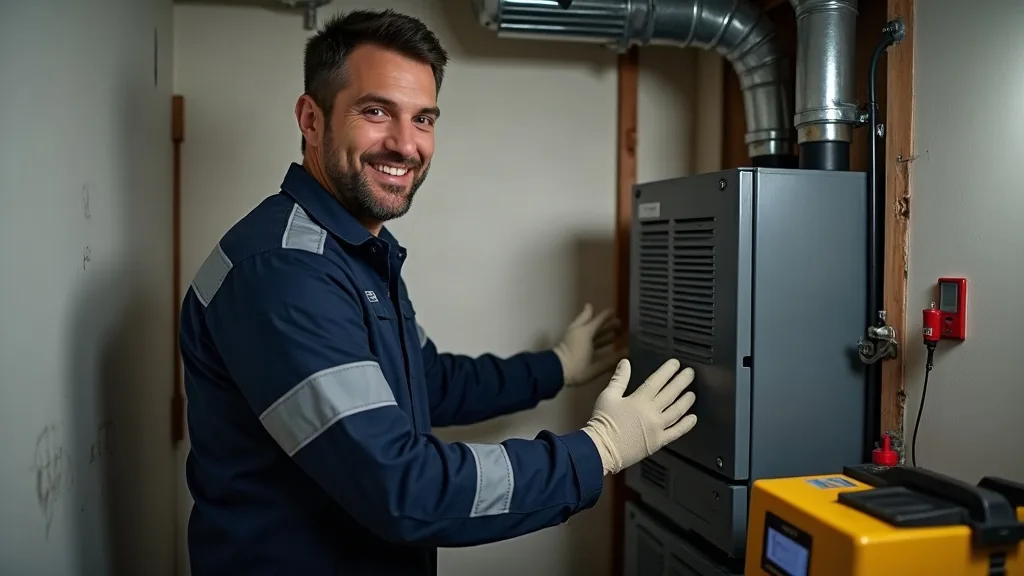
HVAC system contamination is a separate and serious pathway. A single fire event can distribute soot and VOCs through every supply and return duct in the home. Without dedicated air duct cleaning, occupants re-expose themselves to airborne particulates every time the system runs—long after the visible cleanup appears complete.
Why South Florida Humidity Makes Smoke Damage Spread Faster
West Palm Beach's sustained high humidity—routinely above 70% year-round—fundamentally changes the physics of smoke migration. Humid air acts as a carrier, driving smoke particles deeper into porous materials before those materials can dry and stabilize. In a drier climate, smoke residue settles near surfaces and remains more accessible to remediation. Here, it moves.
That dynamic is especially acute in the pre-1980 housing stock that makes up a substantial share of West Palm Beach's single-family homes. Original plaster walls, older blown-in insulation, and unpainted masonry are significantly more porous than modern materials. Humid air carries smoke residue into those substrates faster, compressing the window during which thermal fogging, hydroxyl treatment, and structural drying can still reach the contamination effectively.
How much does fire damage restoration cost in West Palm Beach? Cost depends on factors that compound quickly in this market: affected square footage, residue type, material porosity, and how many hours elapsed before remediation began. Because humidity narrows the viable treatment window, delayed response can move a job from a straightforward odor neutralization and surface clean into full material removal and replacement—a scope difference that can represent tens of thousands of dollars. Any accurate estimate requires an on-site assessment, and any contractor pulling permits through the City of West Palm Beach Building Division will need that scope documented before work begins.
The practical takeaway: in South Florida, the gap between "manageable smoke damage" and "structural remediation" is narrower than in most U.S. markets, and it closes faster.
Health Hazards of Smoke Damage That Linger After the Fire Is Out
Smoke residue stops being visible long before it stops being dangerous. The health risks that remain after a fire are chemical, biological, and structural—and in West Palm Beach's climate, they escalate faster than most homeowners expect.
Respiratory and Chemical Risks from Residual Soot and VOCs
Soot particles are small enough to bypass the body's upper respiratory defenses and lodge in lung tissue. Prolonged exposure to smoke residue—even at trace concentrations—is linked to respiratory irritation, headaches, and longer-term cardiovascular stress. The specific hazard depends on what burned:
- Wet smoke residue from slow, smoldering fires leaves a sticky, pungent residue that clings to surfaces and releases VOCs over an extended period.
- Dry smoke residue from fast, high-temperature fires is finer and more easily airborne, making inhalation risk higher during any disturbance of affected surfaces.
- Protein smoke residue from kitchen fires is nearly invisible but carries strong odors and VOCs that persist without targeted odor neutralization.
HVAC system contamination is the critical multiplier here. Every time a contaminated system cycles, it redistributes soot and VOCs throughout the home—including rooms that showed no visible smoke damage. This is why air duct cleaning is not optional; it is a prerequisite for safe reoccupancy.
How much does smoke damage restoration cost? The honest answer is that it depends heavily on residue type and how quickly treatment begins. A protein residue job caught within 24 hours is a fundamentally different scope than wet smoke residue left for a week in a home with a porous plaster interior. Factors that drive cost include square footage, number of affected HVAC zones, and whether VOC off-gassing has already penetrated structural cavities. On-site assessment by an IICRC Fire and Smoke Restoration certified technician is the only reliable starting point.
Hidden Mold Risk When Smoke Damage Meets West Palm Beach's Humid Climate
Water used to extinguish a fire introduces a secondary hazard that South Florida's climate converts into an urgent one. Suppression water saturates walls, subfloors, and insulation; at ambient humidity routinely above 70%, that moisture does not evaporate on its own. Without aggressive structural drying, mold colonization can begin within 24 to 48 hours in the same damaged materials already compromised by smoke penetration.
The pre-1980 housing stock common across West Palm Beach compounds this directly. Older plaster and original blown-in insulation retain moisture differently than modern materials—they absorb it unevenly and release it slowly, creating persistent damp pockets that standard airflow cannot reach. Smoke damage that has already driven particulates deep into those substrates now shares that space with active mold growth, making remediation significantly more complex than either problem alone.
Thermal fogging and hydroxyl treatment address VOCs and odor; they do not address moisture. Both workstreams—smoke remediation and structural drying—must run concurrently, not sequentially, to prevent the mold window from opening. Contractors coordinating this work in West Palm Beach will need scope documentation aligned with City of West Palm Beach Building Division permit requirements before structural repairs can begin.
Can Smoke Damage Be Cleaned Completely—And What Does Restoration Involve?
Can smoke damage be cleaned completely? In most cases, yes—but "completely" depends on two variables that are rarely discussed together: residue type and response time. Dry smoke residue from a fast, hot fire is far easier to remove than wet smoke residue, which leaves a thick, oily film that bonds aggressively to porous surfaces. Protein smoke residue—common after kitchen fires—is nearly invisible yet produces some of the most persistent odor compounds of any residue type. What makes West Palm Beach properties particularly vulnerable is that the humidity carrying those particles into plaster, older insulation, and wood framing accelerates bonding. Once residue has penetrated legacy materials past a certain depth, mechanical cleaning alone cannot extract it—which is why the remediation window matters as much as the method.
What professional smoke and fire restoration actually covers
Restoration is not cleaning. It is a coordinated sequence of assessment, removal, treatment, and verification—executed by technicians who hold IICRC Fire and Smoke Restoration certification, which is the industry credential that defines the standard of care.
A properly scoped restoration engagement typically includes:
- Residue classification — identifying whether soot is dry, wet, or protein-based, since each requires a different cleaning chemistry and approach
- Structural content removal — pulling damaged insulation, drywall, or other compromised materials before chemical treatment begins
- Surface-by-surface cleaning — using residue-appropriate products; wet smoke residue, for instance, requires alkaline cleaners that would damage materials treated incorrectly
- HVAC system contamination assessment and air duct cleaning — soot and VOCs distributed through ductwork must be cleared before the system runs again
- Odor neutralization — thermal fogging and hydroxyl treatment both address VOCs embedded in materials; the choice depends on occupancy status and material type
- Verification and clearance — air quality testing confirms VOC levels are within safe thresholds before reoccupancy
In pre-1980 homes, structural drying typically runs concurrently with smoke remediation rather than after it, because moisture trapped in original plaster and insulation cannot wait for the smoke scope to close.
Do I need a permit to repair fire damage in West Palm Beach?
Structural repairs following a fire—replacing framing, drywall, electrical systems, or insulation—require permits through the City of West Palm Beach Building Division. Cosmetic work like repainting after professional cleaning generally does not. The practical distinction matters because unpermitted structural repairs can create title and insurance complications if discovered during a future sale or claim.
For scope documentation, your contractor should be producing a detailed damage assessment that aligns with what the Building Division will need to review. Verify before work begins which line items require a permit and which do not—this is a conversation to have with your restoration coordinator, not something to assume after demolition starts.
Smoke Damage Repair Cost: What West Palm Beach Homeowners Should Expect
How much does smoke damage restoration cost?
Smoke damage restoration costs vary widely because the variables that drive price—residue type, affected square footage, material porosity, and response time—compound differently in every structure. As a general range, residential smoke damage restoration commonly runs from a few thousand dollars for a contained kitchen incident to well over $30,000 for whole-house contamination involving HVAC system contamination, structural material replacement, and multiple odor neutralization passes.
What that range doesn't capture is how West Palm Beach's sustained humidity compresses the remediation window. In a drier climate, a homeowner might have days to begin professional intervention before wet smoke residue bonds permanently to surfaces. In South Florida, that window shortens significantly—and a delayed response in a home with original plaster walls can push a mid-range project into the upper cost tier simply because the penetration depth of soot and VOCs has increased.
How much does fire damage restoration cost in West Palm Beach?
Fire damage restoration encompasses smoke remediation plus structural repairs, and the two scopes often run simultaneously in pre-1980 West Palm Beach homes. Expect fire damage restoration to cost more than smoke-only work for one straightforward reason: structural drying, debris removal, and permitted rebuilding add to the remediation line items.
A rough breakdown of cost drivers:
| Scope Element | What Drives Cost Up Locally |
|---|---|
| Residue type | Wet smoke residue and protein smoke residue require labor-intensive cleaning chemistry vs. dry smoke residue |
| HVAC system contamination | Older ducting in pre-1980 homes is harder to clean and may require replacement |
| Air duct cleaning | Extent of soot distribution through the system |
| Thermal fogging / hydroxyl treatment | Number of passes required; occupancy constraints |
| Structural drying | Concurrent with smoke scope in homes with plaster and legacy insulation |
| Permitted repairs | City of West Palm Beach Building Division permit fees plus inspection timelines |
Do I need a permit to repair fire damage in West Palm Beach? Structural work—framing, electrical, insulation, drywall—requires permits through the City of West Palm Beach Building Division. Professional cleaning, thermal fogging, and odor neutralization do not. Skipping permits on structural repairs creates title and insurance exposure that surfaces at resale or during a future claim.
Factors that change the final number
The most consequential factors specific to this market:
- Age of the home. Pre-1980 construction typically means plaster walls, older blown insulation, and original ductwork—all highly porous materials that absorb smoke residue faster and require more aggressive intervention.
- Residue classification. Dry smoke residue is the least costly to address. Wet smoke residue and protein smoke residue demand different cleaning chemistries and significantly more labor time. Misclassifying residue—and using the wrong approach—means redoing the work.
- Response time. Every hour of exposure in high humidity drives particles deeper into legacy materials. A project scoped on day one will cost less than the same project scoped on day three.
- HVAC scope. Soot distributed through ductwork before the system was shut down can mean full air duct cleaning or component replacement—a line item that surprises homeowners who didn't know the HVAC was running during or after the fire.
- Technician credentials. Verify that both the restoration company and the lead technician carry IICRC Fire and Smoke Restoration certification. Uncertified work may not meet the documentation standard your insurer or the Building Division requires.
Get a written scope of work before anything begins. The scope should distinguish permitted structural repairs from remediation services—because those two tracks move at different speeds and involve different approvals.
Palm Beach Restoration Pros connects you with licensed local contractors. One call, no form.
Call (561) 342-0374Frequently Asked Questions
How much does fire damage restoration cost in West Palm Beach?
Fire damage restoration in West Palm Beach typically costs between $3,000 and $50,000, depending on severity and affected area. Palm Beach Restoration Pros provides free on-site assessments to give accurate estimates. Most homeowner insurance policies cover fire and smoke damage restoration, so contact your insurer immediately after a loss.
How much does smoke damage restoration cost?
Smoke damage restoration costs typically range from $2,000 to $6,000 for moderate damage, though severe cases can exceed $10,000. Costs depend on the affected square footage, material types, and odor severity. Palm Beach Restoration Pros offers transparent pricing and works directly with your insurance company to streamline the claims process.
Can smoke damage be cleaned completely?
Yes, smoke damage can be completely cleaned when professionals use the right techniques and equipment. Industrial air scrubbers, thermal fogging, and specialized chemical treatments remove soot and odors effectively. Palm Beach Restoration Pros uses IICRC-certified methods to fully restore smoke-damaged homes in West Palm Beach to pre-loss condition.
Do I need a permit to repair fire damage in West Palm Beach?
Yes, most structural fire damage repairs in West Palm Beach require permits through the City of West Palm Beach Building Department. Permits are typically needed for electrical, plumbing, and structural work. Palm Beach Restoration Pros handles the permitting process on your behalf, ensuring all repairs meet local Florida building codes.
What does smoke damage do to a house?
Smoke damage corrodes surfaces, discolors walls, destroys fabrics, and leaves persistent odors throughout a home. Acidic soot can permanently damage electronics, metals, and finishes within hours if untreated. Prompt professional restoration by Palm Beach Restoration Pros minimizes secondary damage and prevents long-term structural and air quality problems in your West Palm Beach home.