Who Cleans Biohazards? What West Palm Beach Needs to Know
Reviewed by our editorial team for accuracy
Quick answer: Licensed biohazard remediation technicians clean scenes involving bodily fluids, unattended deaths, sewage backups, and other biological hazards. These professionals hold OSHA bloodborne pathogen training, use EPA-registered hospital-grade disinfectants, and dispose of regulated waste through certified channels—qualifications that make DIY cleanup both dangerous and potentially illegal.
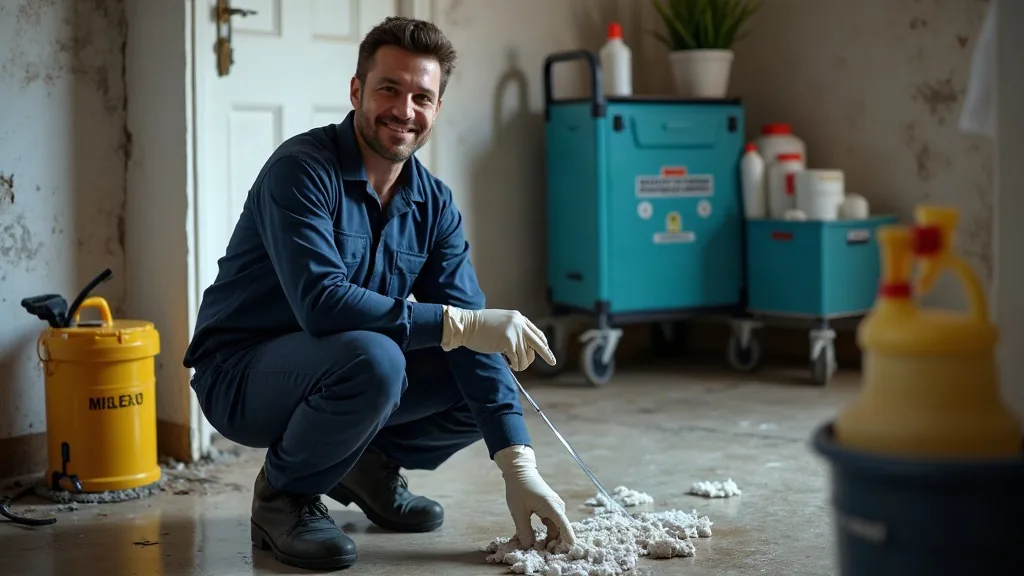
Who Cleans Biohazards Like Sewage Backups or Unattended Deaths
Biohazard remediation is performed by trained, credentialed technicians—not police, not fire crews, and not general cleaning services. Understanding who does this work, and why the distinction matters in West Palm Beach specifically, helps property owners avoid costly mistakes after a traumatic or contamination event.
Why Police, Fire Departments, and Standard Cleaners Do Not Perform This Work
First responders secure scenes and document evidence. Once they clear a location, their role ends. The cleanup is never their responsibility, and no Florida statute requires it to be.
Standard cleaning companies face a harder boundary: handling Blood or Other Potentially Infectious Materials (BOPIM) without proper training and engineering controls violates OSHA's Bloodborne Pathogen Standard (29 CFR 1910.1030). That regulation mandates specific exposure controls, documentation, and waste handling procedures that a general janitorial crew is not equipped to meet.
West Palm Beach adds a compounding layer. Much of the city's housing stock predates 1980, meaning porous concrete block, older cast-iron drain lines, and construction that absorbs contaminated material rather than shedding it. When FEMA Special Flood Hazard Area groundwater intrusion mixes with a sewage backup in that kind of structure, the result is a multi-category contamination event—not a mopping job.
What Licenses and Training Qualified Technicians Actually Carry
Qualified crews bring a specific stack of credentials:
- OSHA 29 CFR 1910.1030 compliance training covering BOPIM exposure controls and personal protective equipment (PPE) requirements
- Regulated medical waste disposal authorization, required to legally transport and hand off biological material in Florida
- Florida Department of Health awareness of reportable conditions that may arise during remediation
- Familiarity with City of West Palm Beach Building Division permit requirements and the Florida Building Code, which govern structural work triggered when contamination penetrates walls, subfloors, or framing in older construction
- Palm Beach County Floodplain Management protocols when remediation intersects a flood-damaged structure
EPA-registered hospital-grade disinfectants are the baseline standard for surface treatment—not consumer-grade products. Non-porous salvageable materials get treated with those disinfectants; porous materials that cannot be decontaminated to a safe threshold are removed as regulated waste.
How much does crime scene cleanup cost in West Palm Beach? There is no fixed rate. Scope drives cost: square footage affected, contamination category, material porosity, and whether permit-required structural repairs follow remediation. Estimates from vetted local crews reflect all of those variables. Florida homeowners insurance sometimes covers biohazard remediation under the policy's additional coverages—worth confirming with your carrier before assuming the cost falls entirely on you.
Situations That Require a Biohazard Remediation Crew
Any of the following calls for a licensed biohazard remediation technician rather than a general contractor or cleaning service:
- Unattended death cleanup — decomposition accelerates rapidly in South Florida heat and penetrates porous substrates quickly
- Trauma scene remediation — blood or bodily fluid involving BOPIM at any volume
- Crime scene cleanup — after law enforcement releases the scene
- Sewage backup remediation — particularly in pre-1980 homes where floodwater has entered through foundation or wall penetrations, mixing Category 3 (grossly contaminated) water with structural materials
- Any situation where a responding agency has flagged biological contamination on-site
The sewage-plus-floodwater scenario deserves specific attention in this market. Palm Beach County Floodplain Management designations mean a meaningful portion of West Palm Beach properties sit in or near FEMA Special Flood Hazard Areas. When those properties flood and an existing drain line fails simultaneously—a documented pattern during heavy rain events—the contamination profile is immediately biohazardous, not merely water-damaged. That requires remediation crews trained in both categories, not just one.
Biohazard Cleanup Steps: What a Professional Crew Actually Does
A vetted biohazard remediation technician follows a defined sequence—not a general cleaning checklist. Each phase is designed to contain exposure risk, meet regulatory thresholds, and leave the structure genuinely safe rather than superficially clean.
Assessment, containment, and protection before any cleaning begins
The crew's first priority is establishing exactly what they are dealing with before anyone touches a contaminated surface. In West Palm Beach, that assessment has to account for construction era and site classification. A pre-1980 home with plaster walls, original subfloor, and a FEMA Special Flood Hazard Area designation presents a fundamentally different contamination profile than a newer concrete-block build on higher ground.
Documented assessment steps typically include:
- Contamination category — sewage backup, Blood or Other Potentially Infectious Materials (BOPIM), decomposition, or a compound scenario involving multiple categories
- Material porosity — drywall, subfloor, and older masonry absorb Category 3 water and biological material at different rates; the evaluation determines what can be decontaminated versus what must be removed
- Permit and floodplain flags — if structural materials require removal, the City of West Palm Beach Building Division may require permits before work proceeds; Palm Beach County Floodplain Management rules apply when the event involves a flood-damaged structure
Once scope is confirmed, the crew establishes physical containment using poly sheeting and negative-air pressure when airborne particulates are a risk. Every technician entering the work zone dons appropriate personal protective equipment (PPE) per OSHA Bloodborne Pathogen Standard (29 CFR 1910.1030)—minimum requirements include gloves, eye protection, and respiratory protection scaled to contamination level.
Removal of contaminated materials and hospital-grade decontamination
Porous materials that cannot be decontaminated to a safe threshold—soaked drywall, carpet, insulation, compromised subfloor—are removed and packaged as regulated medical waste. Disposal follows Florida Department of Health requirements for biohazardous material; a general dumpster is not an option.
Non-porous salvageable surfaces then receive treatment with an EPA-registered hospital-grade disinfectant. "Hospital-grade" is a specific EPA classification, not a marketing term—it indicates demonstrated efficacy against bloodborne pathogens and other biological hazards. Application method matters: surfaces require sufficient contact time with the disinfectant solution to achieve the rated kill claim, which a spray-and-wipe approach often fails to deliver.
In older West Palm Beach construction, this stage frequently uncovers secondary contamination—sewage that wicked into wall cavities or under original hardwood during a flooding event. That finding changes the material removal scope and may trigger a supplemental permit review under the Florida Building Code.
Deodorization, verification testing, and clearance
Odor control is a byproduct of thorough decontamination, not a separate cosmetic step. When contaminated materials are fully removed and remaining surfaces are properly treated, the biological source of odor is gone. Residual odor after that point is typically addressed with hydroxyl generators or thermal fogging, depending on the space geometry and HVAC configuration.
Verification follows deodorization. Depending on contamination type, clearance may involve:
- ATP (adenosine triphosphate) surface testing to confirm biological load is below threshold
- Post-remediation air quality sampling when mold colonization was identified alongside the biohazard event
- Documentation provided to the property owner and, where required, to the City of West Palm Beach Building Division as part of permit closeout
Is crime scene cleanup covered by homeowners insurance in Florida? It depends on the policy. Many Florida homeowners policies include coverage for sudden and accidental events—trauma scene remediation or unattended death cleanup may qualify under additional coverages or riders. The trigger event matters: a covered peril under the policy is more likely to result in reimbursement than a pre-existing condition. Confirm coverage scope with your carrier before assuming the full cost is out-of-pocket, and ask whether the insurer requires a licensed crew to submit documentation for the claim—most do.
Clearance documentation is the crew's final deliverable. It confirms the space is safe for reoccupancy and provides a paper trail if questions arise during a future property transaction or insurance review.
Who Pays for Crime Scene Cleanup—and Is It Covered by Insurance in Florida?
Payment responsibility depends on who controls the property—not who called 911.
Who pays for crime scene cleanup: family, landlord, or another source?
Police and fire departments secure a scene and document evidence. They do not clean it. Once investigators clear the property, the cost of trauma scene remediation, unattended death cleanup, or crime scene cleanup falls to whoever holds responsibility for the structure.
In practice, that means:
- Owner-occupied homes: The homeowner bears the cost unless insurance applies (see below).
- Rental properties: The landlord is typically responsible for restoring a unit to habitable condition under Florida law, regardless of who was involved in the incident.
- Commercial properties: The property owner or their management company arranges and funds remediation.
Who cleans biohazards like sewage backups or unattended deaths? A licensed biohazard remediation technician—not a janitorial crew, not a general contractor. That distinction matters in West Palm Beach, where pre-1980 construction and FEMA Special Flood Hazard Area groundwater intrusion can drive sewage into porous substrate behind walls, compounding the biological hazard well beyond the visible surface. Palm Beach County Floodplain Management guidelines and the City of West Palm Beach Building Division may require permitted work before the space is legally reoccupied.
One additional source families sometimes overlook: Florida's Bureau of Victim Compensation can cover remediation costs for qualifying violent crime victims. Eligibility is determined by the Florida Department of Health and the state attorney's office, and the application timeline is separate from the remediation timeline—work can proceed while a claim is pending.
Is crime scene cleanup covered by homeowners insurance in Florida?
Coverage exists in many cases, but the trigger event is what determines eligibility—not the type of cleanup. A sudden, accidental event covered under the base policy is more likely to result in reimbursement than a pre-existing or gradual condition. Unattended death cleanup and trauma scene remediation often qualify under additional living expense riders or special endorsements.
Two practical steps before assuming any cost is out-of-pocket:
- Confirm with your carrier whether the specific event qualifies as a covered peril.
- Ask whether the insurer requires documentation from a Florida-licensed crew trained to OSHA Bloodborne Pathogen Standard (29 CFR 1910.1030) protocols—most do, and submitting a receipt from an uncredentialed cleaner can void reimbursement.
How much does crime scene cleanup cost in West Palm Beach?
Cost ranges vary significantly based on contamination type, affected square footage, and structural complexity. Hypothetical ranges from industry data suggest:
| Scenario | Estimated Range |
|---|---|
| Single-room trauma scene (hard surfaces) | $1,500 – $4,000 |
| Unattended death with extended exposure | $3,000 – $8,000+ |
| Sewage backup with floodwater intrusion | $2,000 – $10,000+ depending on penetration depth |
West Palm Beach properties add variables that can push costs toward the higher end: older porous construction absorbs Blood or Other Potentially Infectious Materials (BOPIM) and sewage differently than modern builds, EPA-registered hospital-grade disinfectant contact times are longer on rough or unpainted masonry, and regulated medical waste disposal fees apply to materials removed from the site. If the Florida Building Code triggers a structural permit for wall or floor removal, that adds both cost and timeline.
Requesting an itemized written estimate before work begins—covering labor, PPE, disinfection materials, and disposal—is the clearest way to verify scope and support an insurance claim.
Why DIY Biohazard Cleanup Puts West Palm Beach Homeowners at Greater Risk
Attempting to clean a biohazard scene without proper credentials exposes you to compounding risks that most homeowners don't anticipate until after the damage—legal, financial, and medical—has already occurred.
Health and legal risks of handling biological hazards without certification
Blood or Other Potentially Infectious Materials (BOPIM) are regulated substances under the OSHA Bloodborne Pathogen Standard (29 CFR 1910.1030). Handling them without appropriate personal protective equipment (PPE), containment protocols, and an EPA-registered hospital-grade disinfectant isn't just dangerous—it can constitute improper disposal of regulated medical waste under Florida Department of Health guidelines.
A general cleaner using household products does not meet the contact-time or concentration requirements that hospital-grade disinfectants are formulated and tested to achieve. Surface appearance after scrubbing is not a proxy for decontamination.
Who pays for crime scene cleanup, the family or police? As covered earlier in this article, the property owner or family bears the cost—not law enforcement. That financial responsibility makes the cleanup decision consequential. Submitting documentation from an uncredentialed crew can void an insurance reimbursement claim outright.
How West Palm Beach's flood zones and older housing stock compound the danger
West Palm Beach sits within FEMA Special Flood Hazard Areas, and Palm Beach County Floodplain Management designations affect a significant portion of the city's residential parcels. When floodwater intrudes, it frequently carries raw sewage—a documented pattern in older neighborhoods where aging lateral sewer lines deteriorate and backflow during storm surges.
Pre-1980 construction, which makes up a large share of West Palm Beach's housing stock, presents specific structural vulnerabilities:
- Porous masonry and unpainted concrete block absorb BOPIM and sewage deeply, requiring longer disinfectant dwell times and often mechanical removal
- Original subfloor materials (tongue-and-groove wood, terrazzo over fill) trap contaminated moisture below the visible surface
- Older plumbing configurations increase the likelihood that a sewage backup remediation event has spread further than it appears
This combination—floodwater, sewage, and porous older construction—creates a compounding biohazard risk that a surface cleaning cannot resolve. The Florida Building Code may also require permitted demolition of affected structural components, which triggers oversight from the City of West Palm Beach Building Division before reconstruction begins. A general cleaning service is not equipped to navigate that process.
Choosing a vetted biohazard remediation specialist in Palm Beach County
The clearest filter is credentialing. A qualified biohazard remediation technician should be able to document:
| Requirement | Why It Matters in West Palm Beach |
|---|---|
| OSHA Bloodborne Pathogen Standard training | Required for legal BOPIM handling |
| EPA-registered hospital-grade disinfectant use | Validates decontamination threshold |
| Regulated medical waste disposal chain of custody | Florida DOH compliance |
| Familiarity with Florida Building Code permit triggers | Essential in pre-1980 construction with flood damage |
| Experience with FEMA flood-zone sewage backup scenarios | Directly relevant to local risk profile |
Ask for written documentation on all five points before work begins. For trauma scene remediation, unattended death cleanup, or any event involving floodwater mixed with sewage, a general cleaning service is not a safe or legally sufficient substitute for a licensed, permit-aware remediation crew.
Palm Beach Restoration Pros connects you with licensed local contractors. One call, no form.
Call (561) 342-0374Frequently Asked Questions
How much does crime scene cleanup cost in West Palm Beach?
Crime scene cleanup in West Palm Beach typically costs between $1,500 and $25,000, depending on severity and affected area size. Factors include biohazard volume, surface types, and required disposal. Palm Beach Restoration Pros provides free on-site assessments and itemized quotes before any work begins.
Is crime scene cleanup covered by homeowners insurance in Florida?
Yes, most Florida homeowners insurance policies cover biohazard and crime scene cleanup as part of dwelling coverage. Coverage limits and deductibles vary by policy. Palm Beach Restoration Pros works directly with insurance carriers to file claims and reduce out-of-pocket costs for West Palm Beach families.
Who cleans biohazards like sewage backups or unattended deaths?
Certified biohazard remediation companies clean hazards like sewage backups, unattended deaths, and trauma scenes. These professionals use EPA-approved disinfectants and follow OSHA regulations. Palm Beach Restoration Pros handles all biohazard categories in West Palm Beach, restoring properties safely while protecting occupants from pathogens and contamination.
Who pays for crime scene cleanup, the family or police?
Families are typically responsible for crime scene cleanup costs, not law enforcement. Police document and investigate but do not remediate. In Florida, victim compensation programs may help offset expenses. Palm Beach Restoration Pros can assist families in navigating insurance claims and available financial assistance options.
How long does biohazard cleanup take?
Most residential biohazard cleanups in West Palm Beach take between four and eight hours, though severe cases involving large areas or structural contamination may require multiple days. Palm Beach Restoration Pros responds 24/7 and works efficiently to return your property to safe, habitable condition as quickly as possible.